Original telescopic photographs of the moon through all its phases — taken from the Northern Hemisphere with a Nikon Fieldscope 82 spotting scope.
Click any thumbnail to view the full-size image.
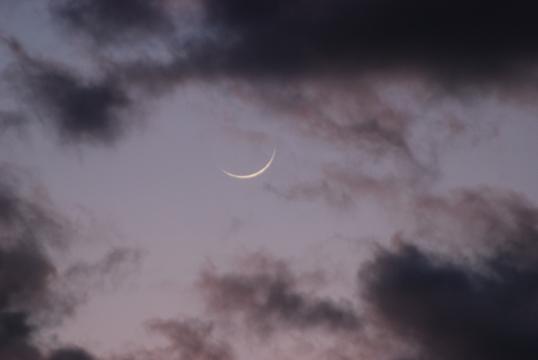
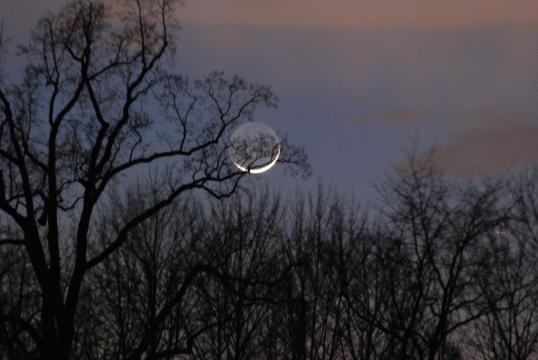
A really new moon — only 6 hours old.
This moon sets just after the sun. The crescent is so thin it's barely visible in twilight.
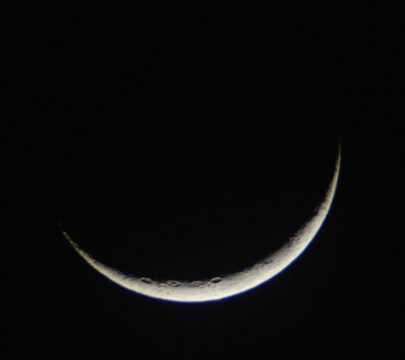
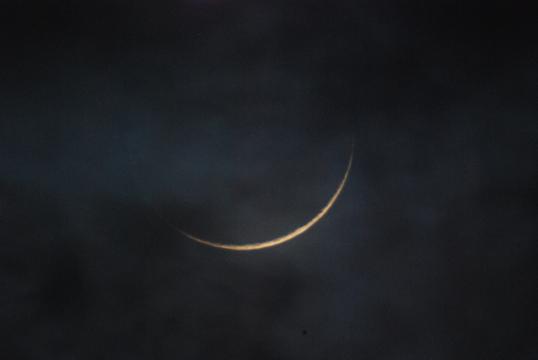
The same moon, 24 hours later.
In a single day the crescent noticeably thickens and climbs higher in the evening sky before setting.

Moon, Venus and Jupiter — December 1, 2008
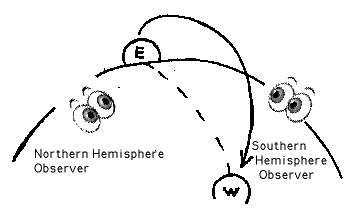
The three objects formed a "frowning face" visible worldwide. In the Southern Hemisphere, the smile was inverted — a smiley face instead.
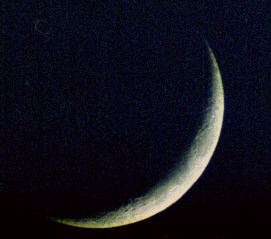
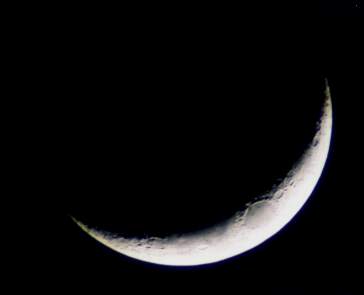
Another new crescent, but getting larger.
Each night the lit portion widens as the moon moves away from the sun. The dark side is still invisible against the sky.

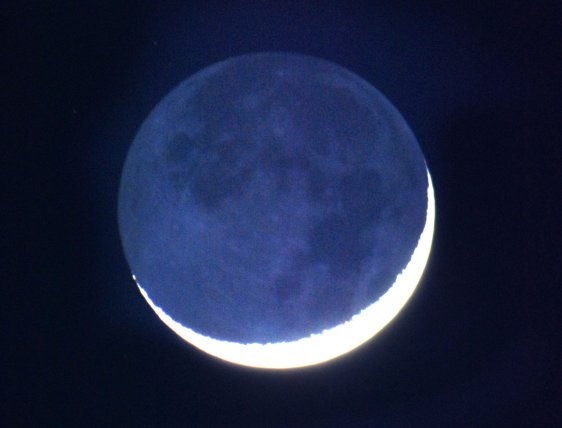
"Old moon in the new moon's arms"
When the moon is new, sunlight reflected off the bright Earth faintly illuminates the dark side of the moon. This soft glow is called Earthshine — a beautiful, ghostly effect visible to the naked eye.
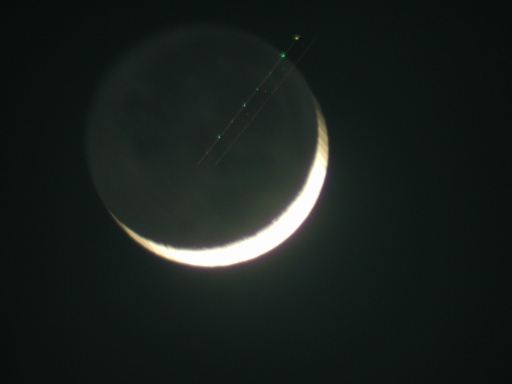
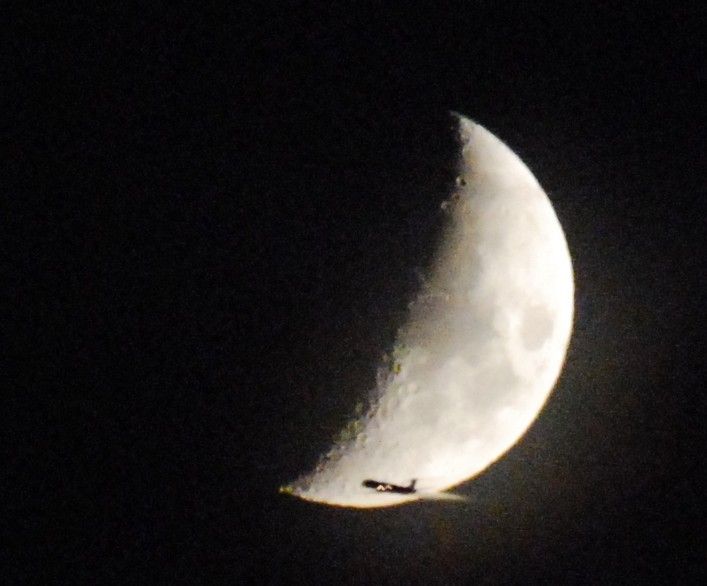
Airplanes & the Moon
Left: a jet plane flying through the Earthshine — an 8-second digital exposure that captured the plane's light trail across the crescent.
Right: a lucky shot of an airplane transiting directly across the moon. These coincidental moments require being in exactly the right place at the right time.
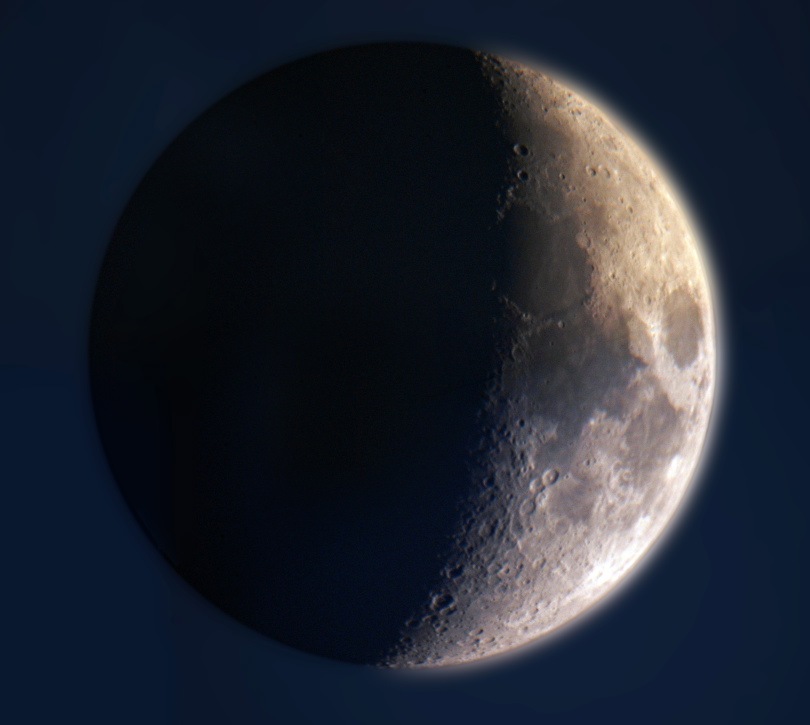
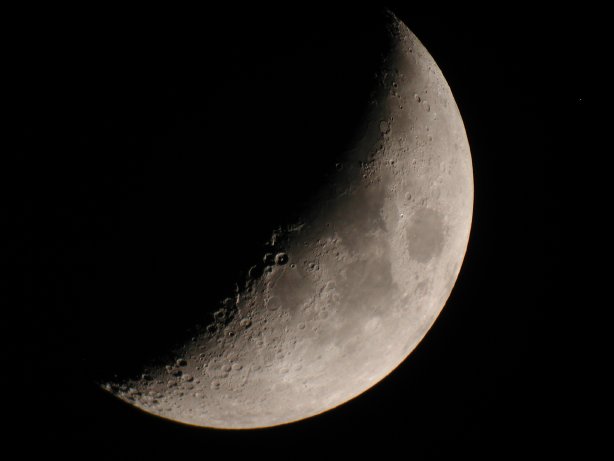
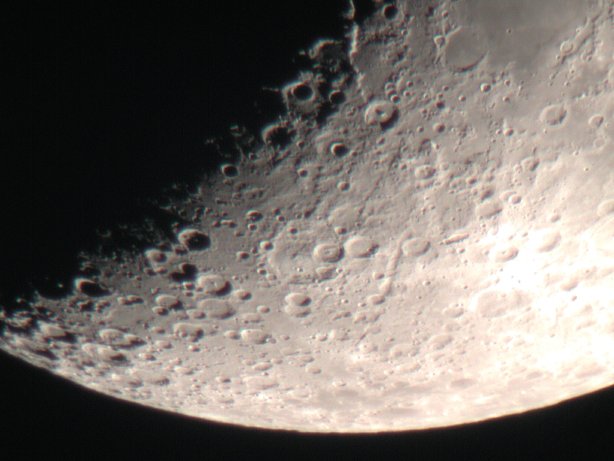
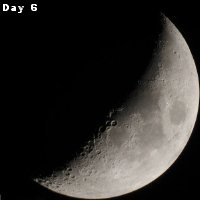
A 6-day moon
Digitally enhanced against a blue sky (left), and two views — wide angle and close-up — taken the same evening. The terminator is now well defined and craters are beginning to emerge along the shadow line.
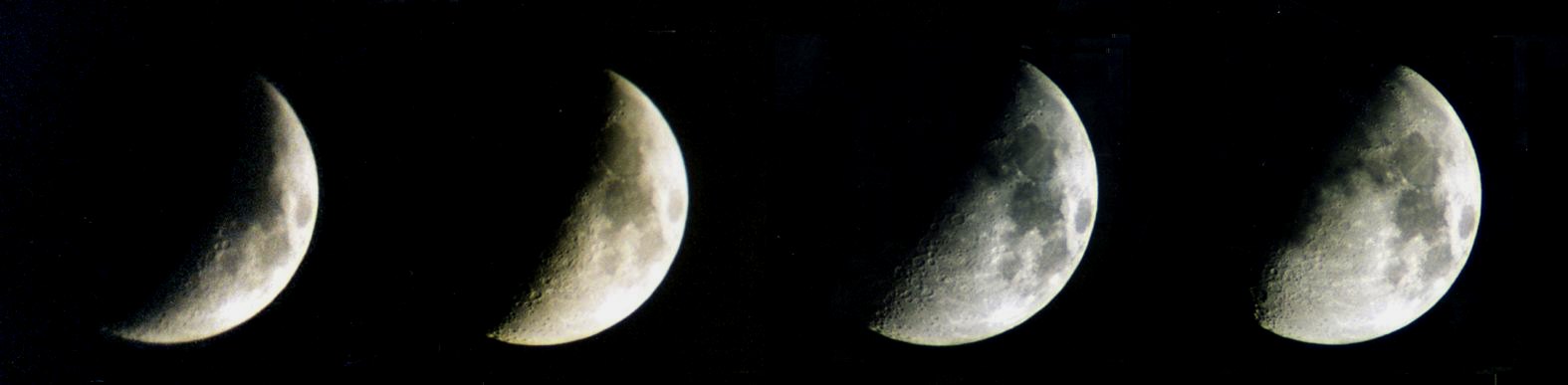
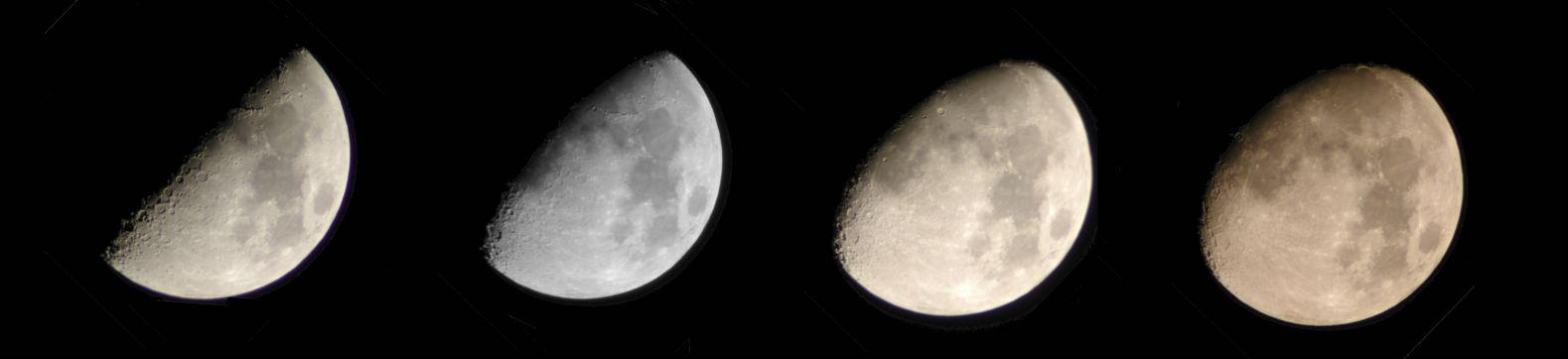
Four consecutive evenings
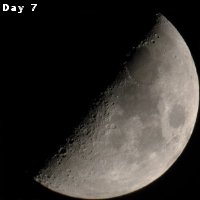
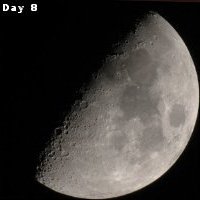
Two sequences showing how dramatically the moon changes from one night to the next. The first covers nights around first quarter; the second shows days 7 through 10. Note how the terminator marches steadily across the surface each evening.
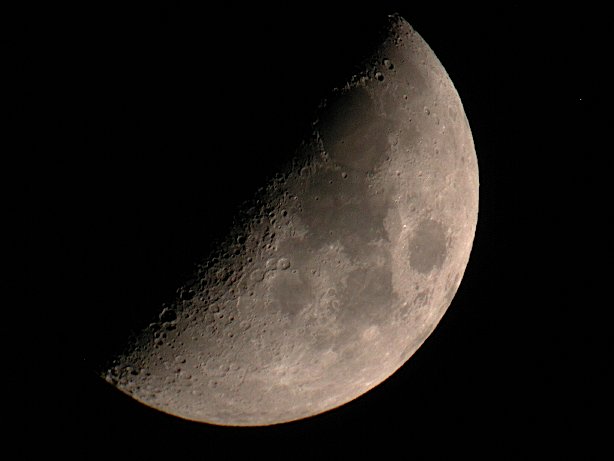

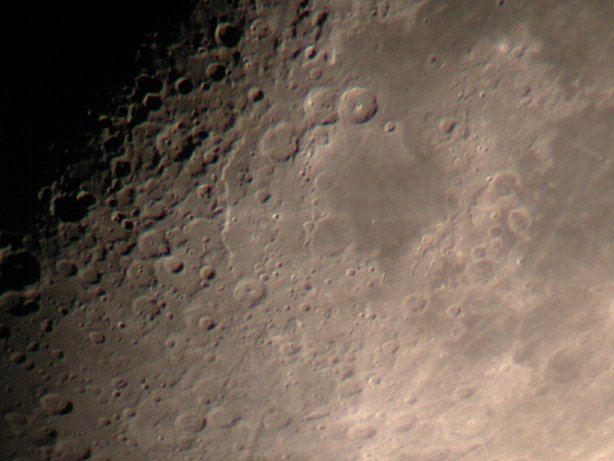
The 7-day moon
At first quarter the moon is exactly half lit. The terminator runs straight down the middle, casting long shadows that reveal the rugged landscape of craters and mountain ranges in sharp relief.
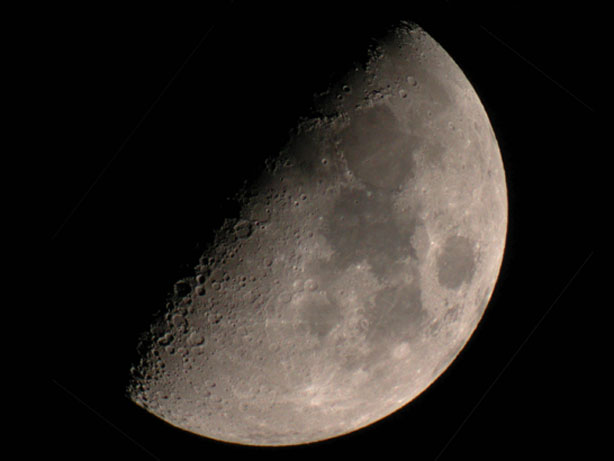

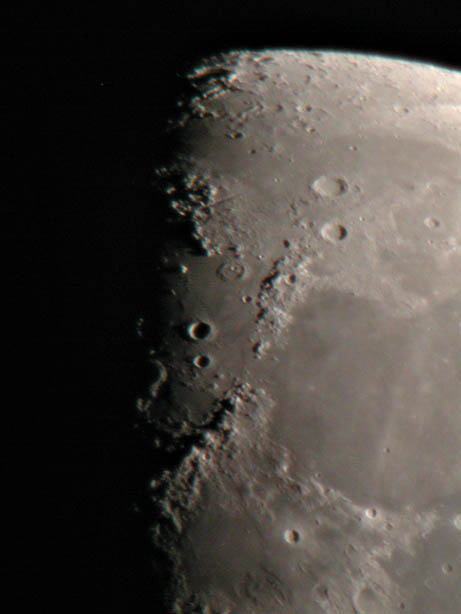
The next night: an 8-day moon
One night past first quarter, the lit portion has grown noticeably. The smallest craters visible in these photos are about 5 miles across.
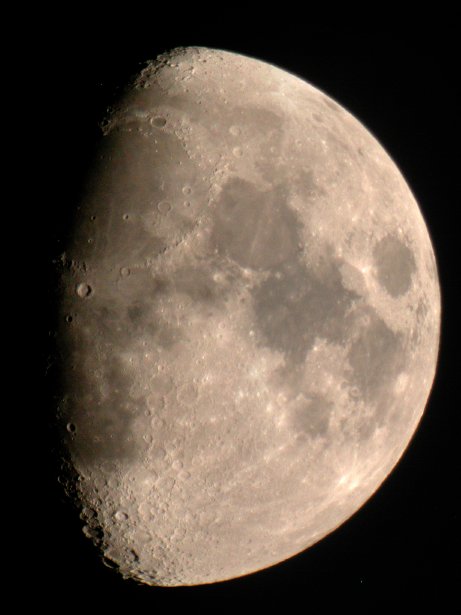
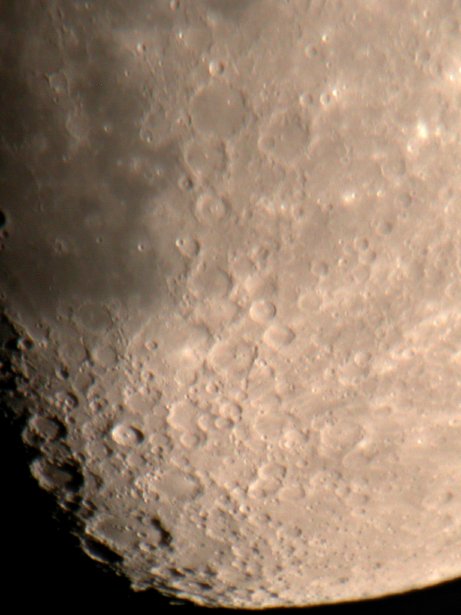
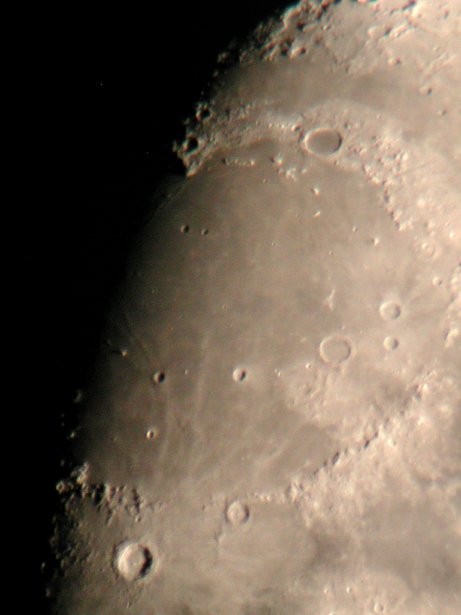
A 9½-day old moon
Approaching gibbous phase. The terminator has moved well past center, revealing the broad lunar highlands and the great dark plains — the maria — formed by ancient volcanic floods.
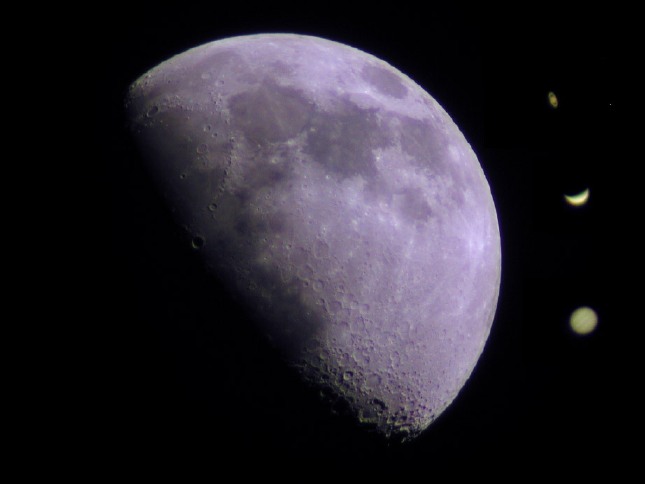
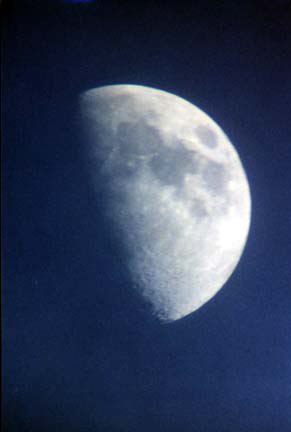
The moon & its neighbors
Left: a composite photo of the moon, Saturn, Venus and Jupiter taken on April 28, 2004 — a striking alignment of four solar system bodies. See more planet photos.
Right: the moon just after first quarter photographed against a brilliant blue afternoon sky.
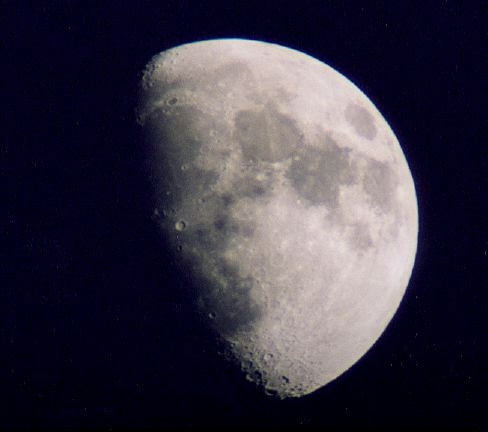
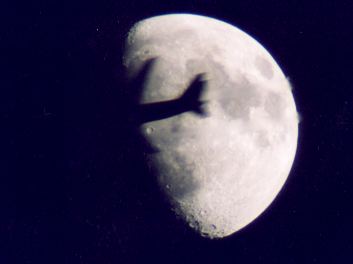
Two views of a 10-day moon — moments apart
Two photos taken within minutes of each other. The second one caught an airplane flying directly across the moon — a pure coincidence that required exactly the right timing.
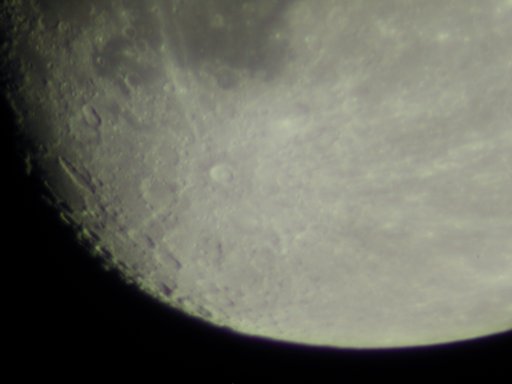
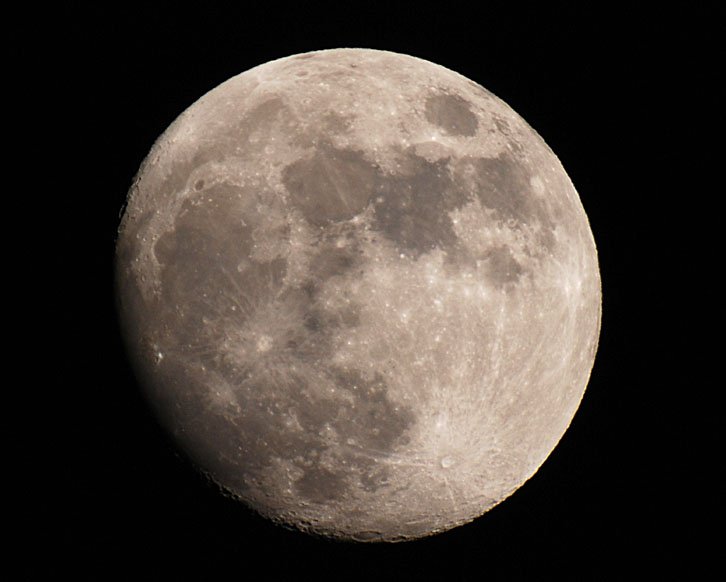
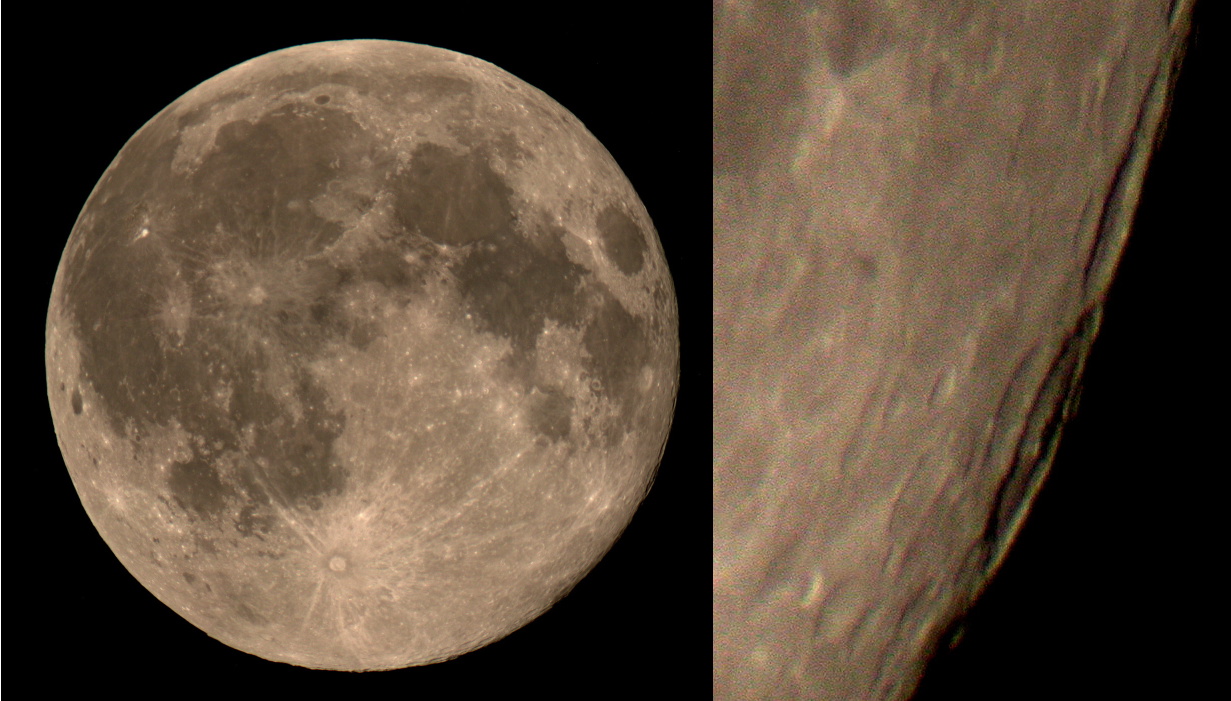
Approaching full — Tycho crater
As the moon approaches full, the bright ray system radiating from Tycho crater becomes unmistakable. The right image was taken with more modern equipment — the improved sharpness is visible.
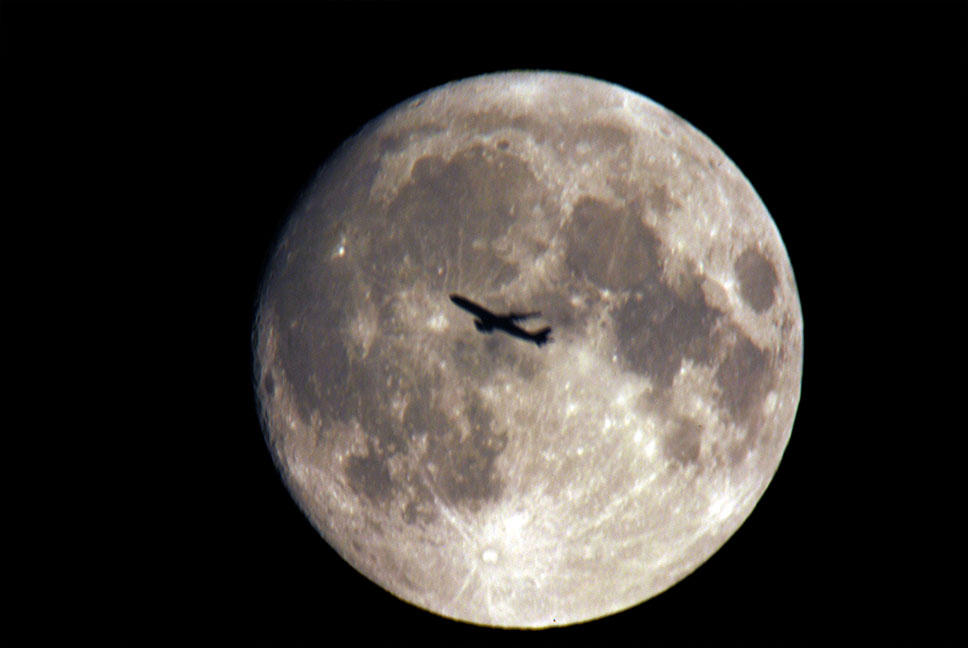
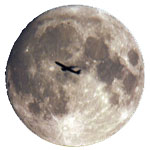
A 98% full moon with a perfectly centered jet plane
The photo is 100% genuine. The jet happens to cross the exact center of the nearly-full moon disk. A moment of extraordinary coincidence — photographed in a single unaltered exposure.

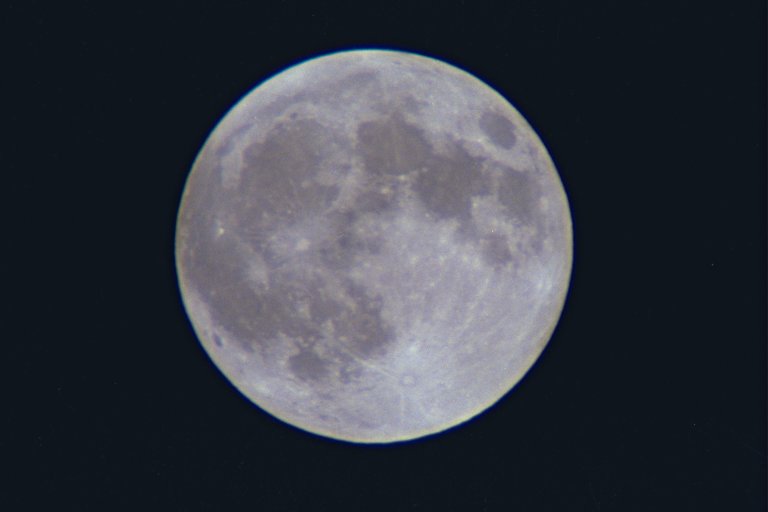
The full moon — brilliant, but craterless
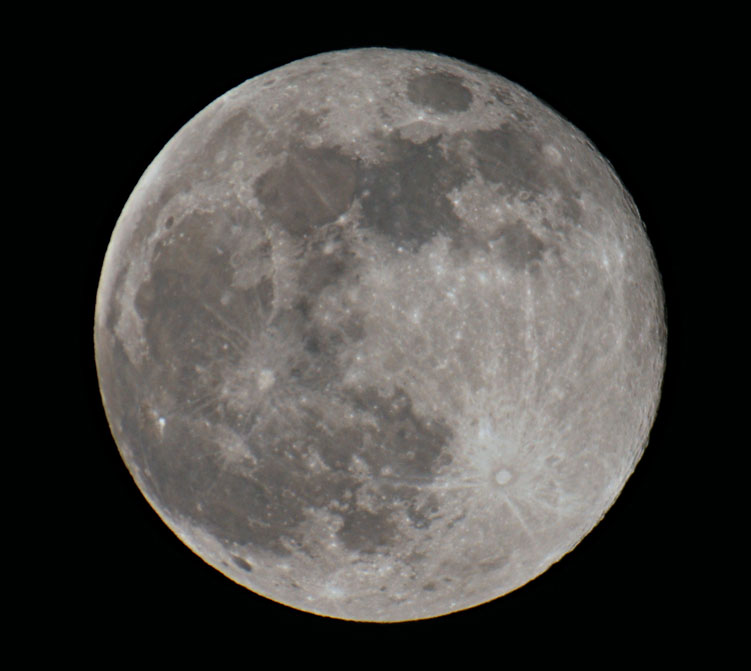
A full moon is dazzling but reveals no craters. Because the sun shines straight down on the surface, there are no shadows — and shadows are what reveal the craters. The full moon rises exactly as the sun sets.
The rightmost image is an exact full moon taken just before a lunar eclipse — you won't find one much rounder than this.
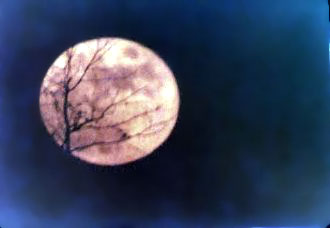
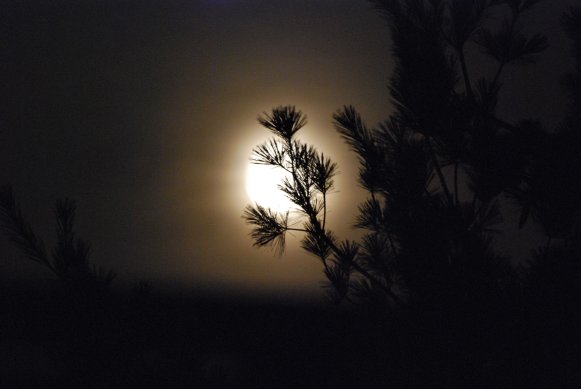
Full moon rising through the trees
The left photo shows a full moon framing itself naturally among tree branches. Notice how the moon appears slightly flattened when close to the horizon — atmospheric refraction bends light differently at the bottom of the disk than the top.
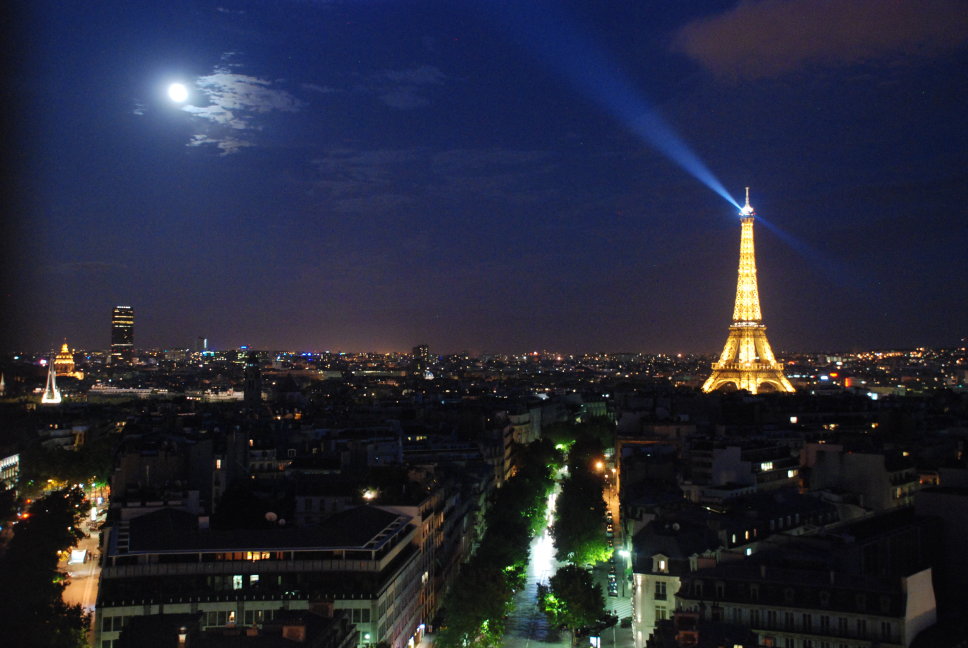
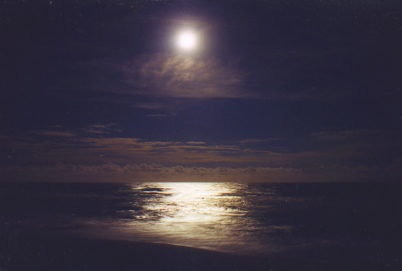
Moonrise around the world
Moonrise over the Eiffel Tower in Paris, France — the moon timed perfectly with the illuminated landmark. And moonrise over the Atlantic Ocean at Cape Hatteras, North Carolina.
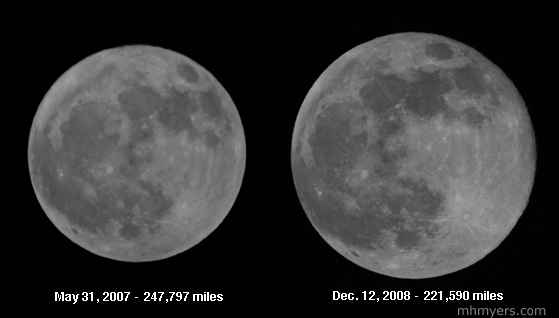
The moon at perigee — closest to Earth
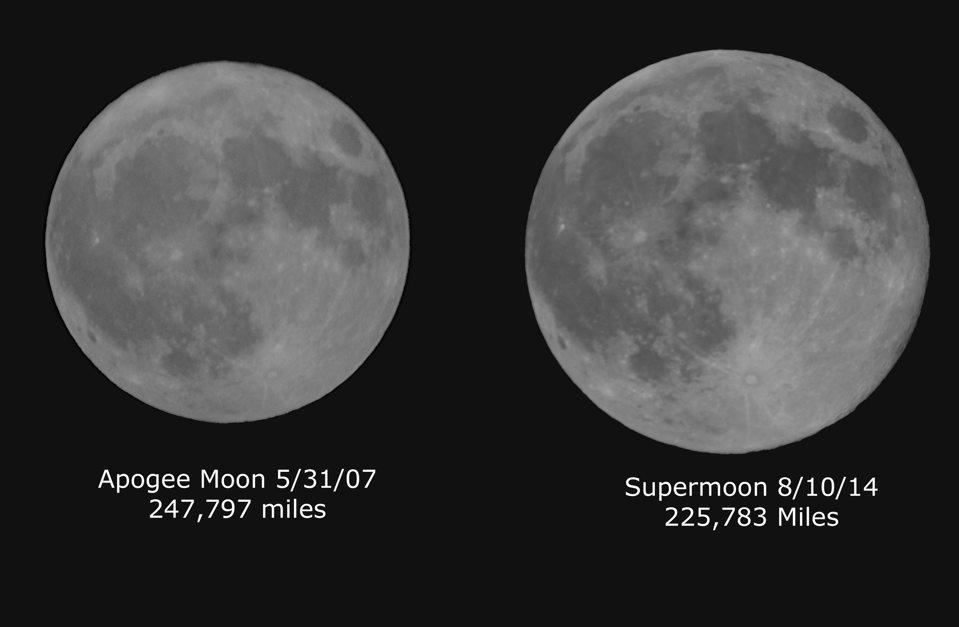
When the moon is at perigee (its nearest orbital point), it appears slightly larger and brighter — the so-called "Supermoon." The comparison photos were taken with the same camera and lens magnification, showing the real but subtle size difference.
The August 2014 Supermoon compared directly against a full moon at its farthest point from Earth.
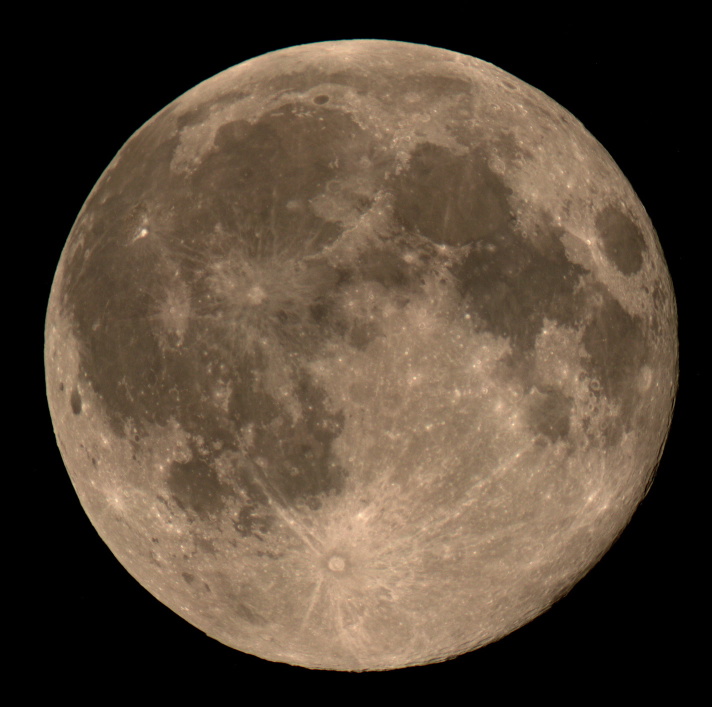
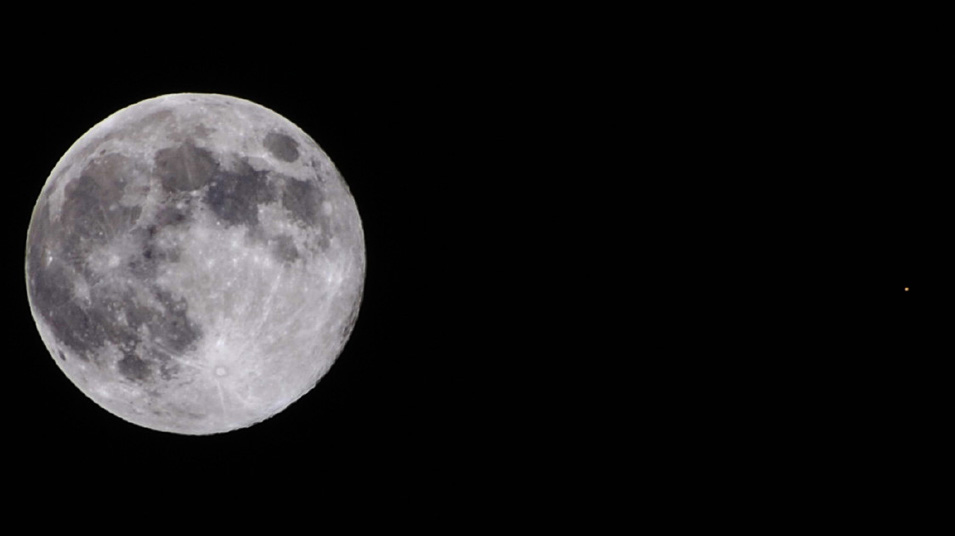
The Harvest Moon & the moon near Mars
Left: the Harvest Moon — the full moon closest to the autumnal equinox — reduced from a 32 megapixel original. See a crop from the full-resolution image.
Right: the full moon next to Mars on December 23, 2007. Mars is the small red dot — a vivid illustration of the relative size of each object in our sky.
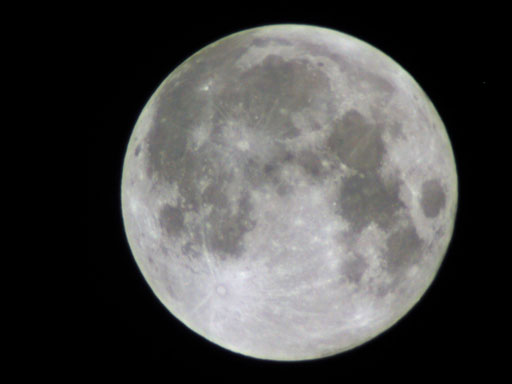


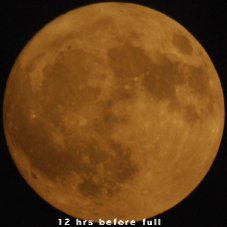
From full moon back toward new
Just 5 hours past full and you can already see a slight loss of roundness on the right side. Over the next few days the waning gibbous moon rises later and later each night, eventually transitioning into last quarter. See more full moon photos.
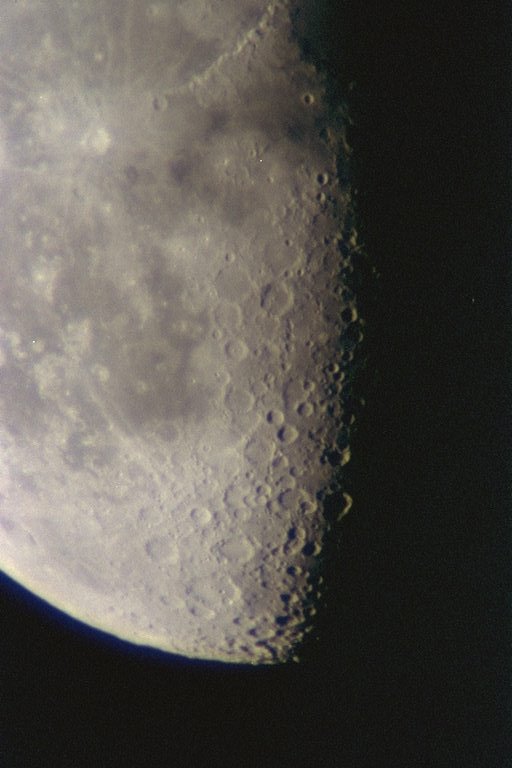

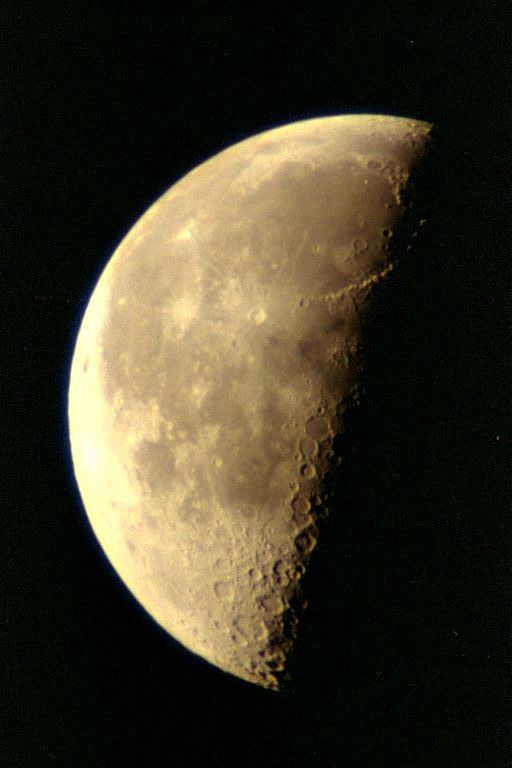
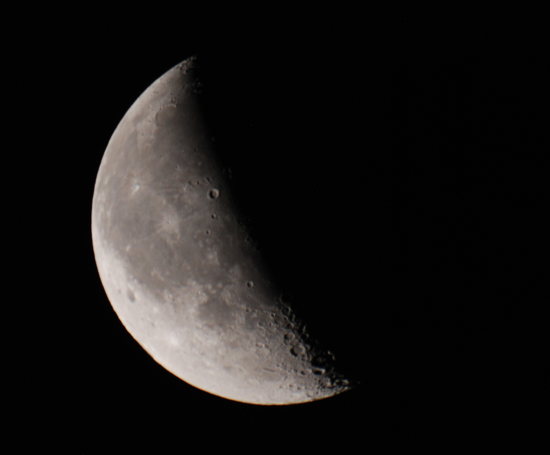
Third quarter — approaching last quarter
Left and center: the same waning moon photographed at 4000mm equivalent (maximum zoom) and wider angle. Look at the detail in those craters!
Right: a beautiful last quarter moon, which rises at midnight. The terminator now forms a perfectly straight line down the center from the other direction.
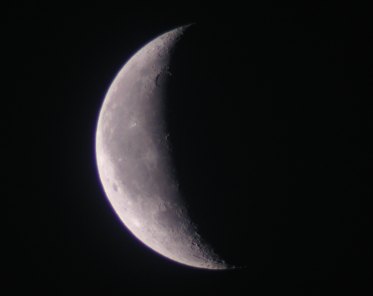
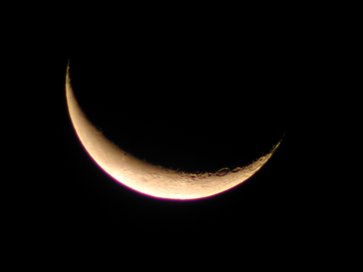
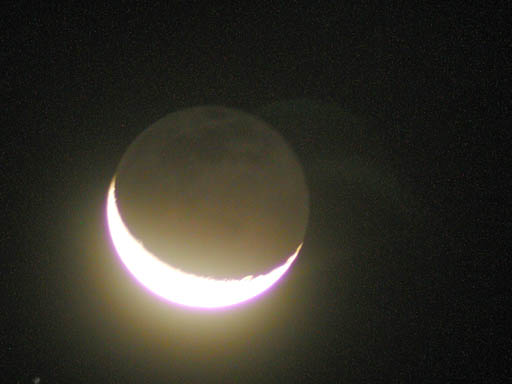
The old, waning crescent
A 23-day moon; exactly 24½ days old; and two photos of a waning 26-day moon — taken at 5 AM as it rose in the early morning sky, just days before disappearing back into new moon.
The cycle completes in about 29½ days, and then begins again.
Four videos showing the moon in motion — from a 3½-week phase timelapse to a real-time demonstration of Earth's rotation.
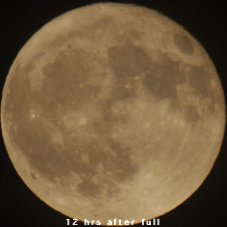
Drag the slider left and right to compare the moon 24 hours apart. The terminator — the line between light and shadow — shifts noticeably from one evening to the next.
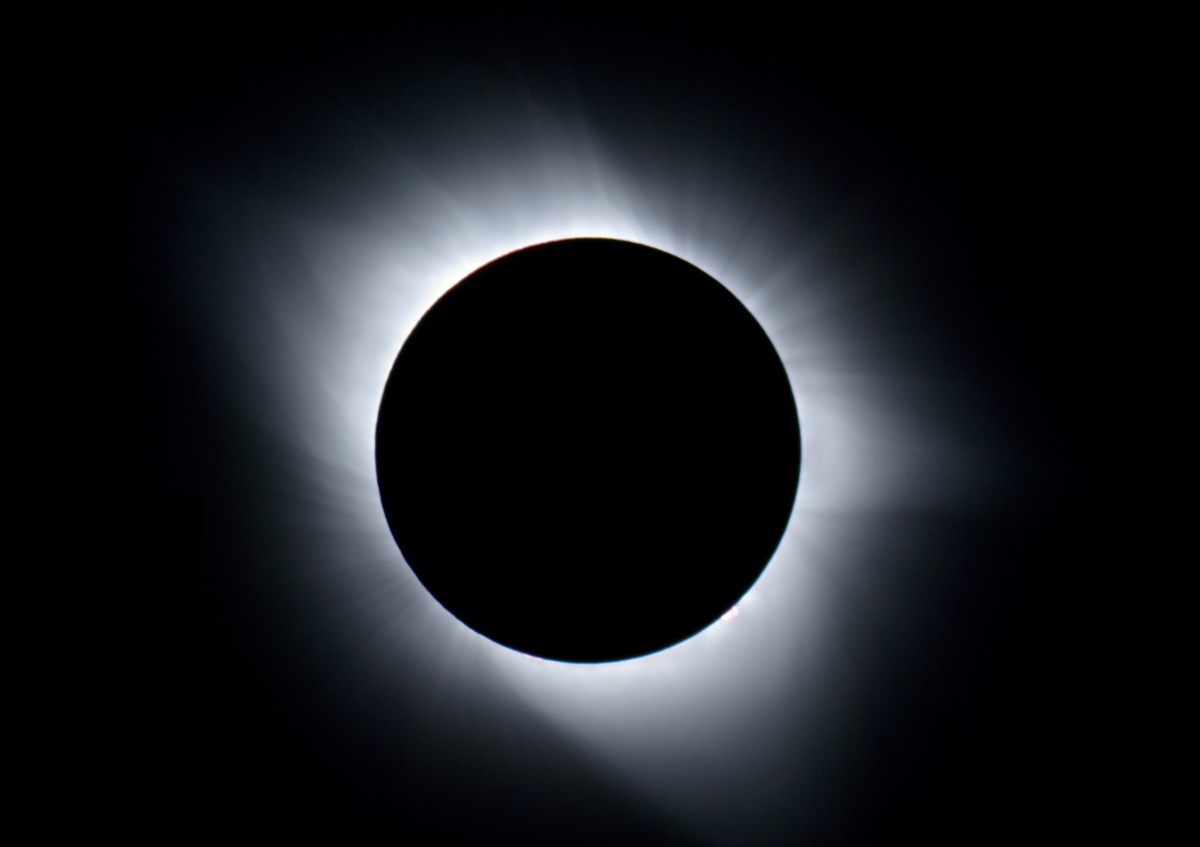
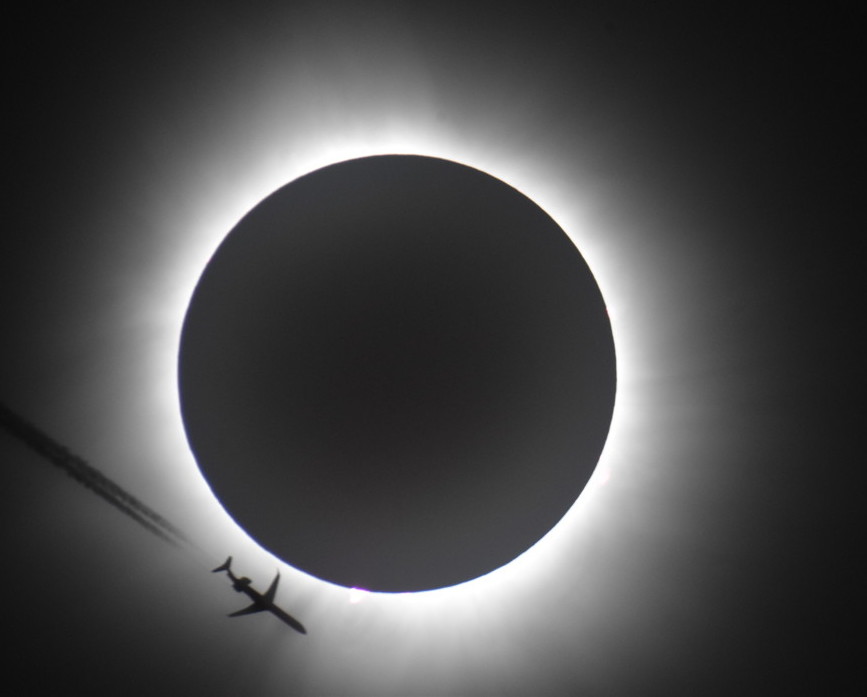
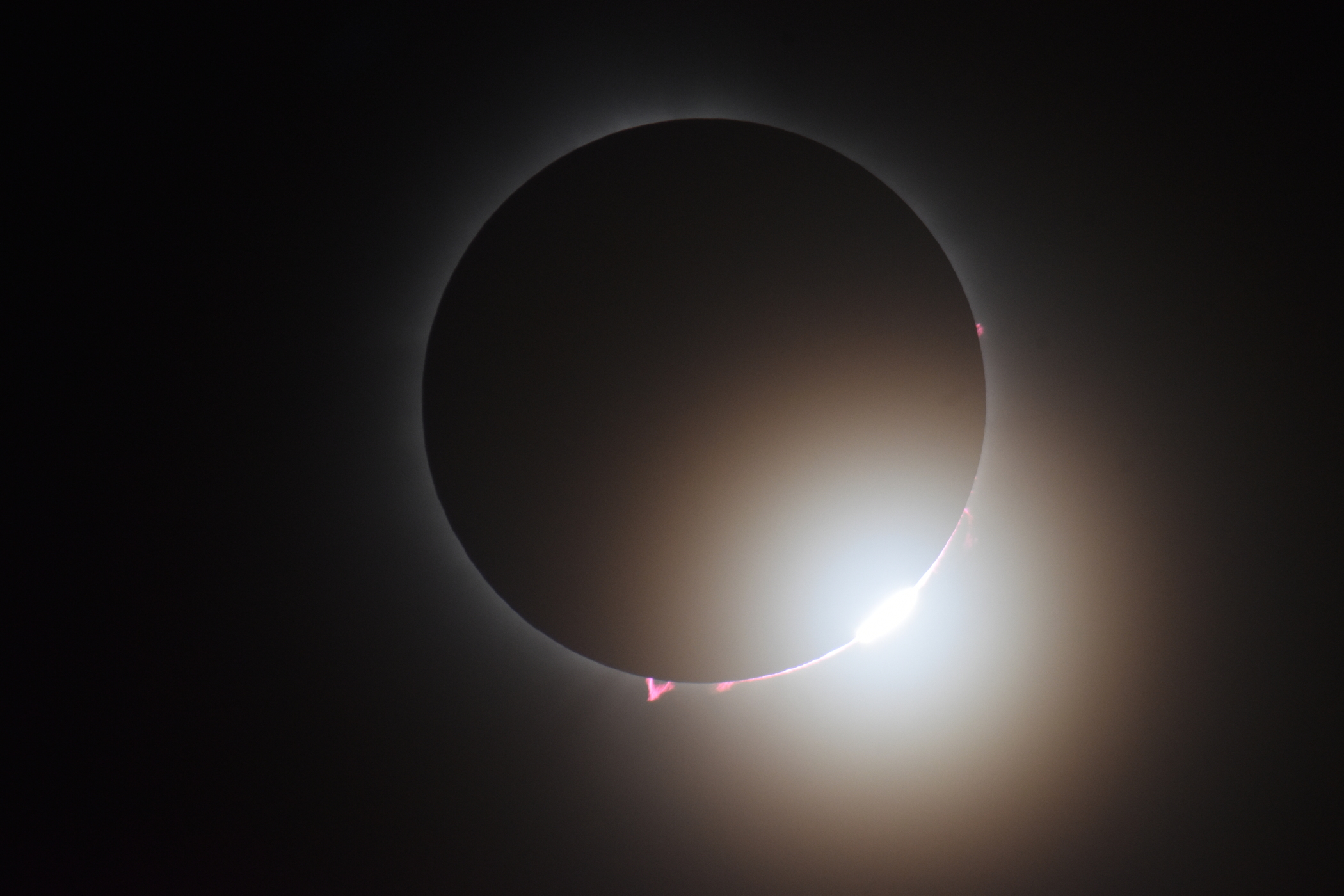
Two total solar eclipses documented with photos and video — the August 2017 eclipse and the rare April 2024 event, which included a stunning airplane transit across the corona.
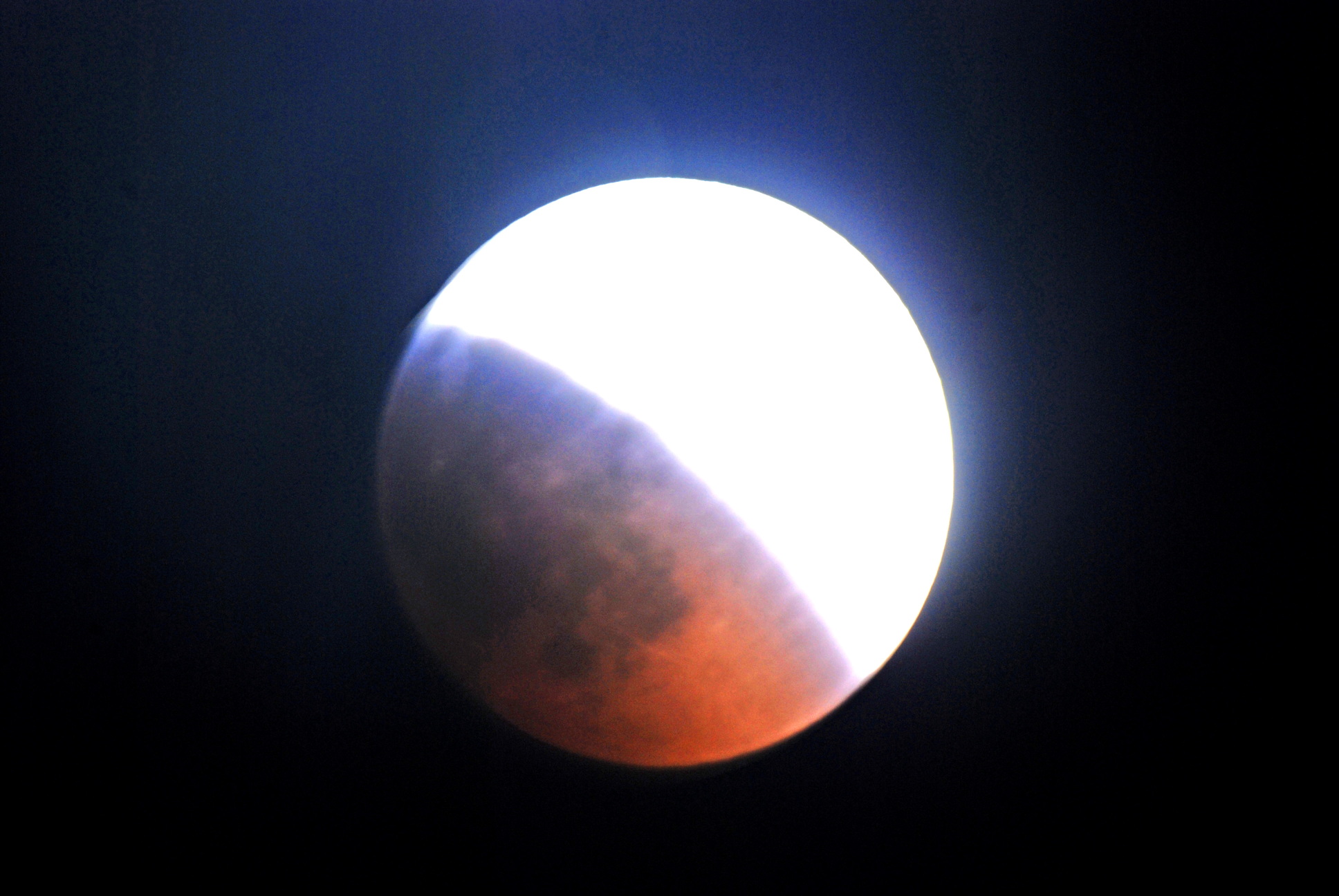
During a lunar eclipse, the Earth passes between the Sun and Moon, casting a deep red shadow across the lunar surface. These photographs capture the dramatic color shift through totality.
View Lunar Eclipse PhotosFascinating facts, visual illusions, and curiosities about Earth's closest neighbor.


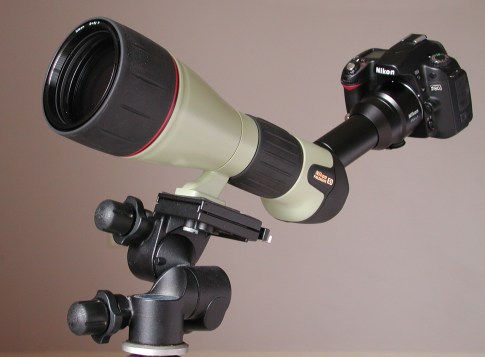
The moon is photographed through a Nikon Fieldscope 82 spotting scope — a major upgrade in optical quality over the earlier setup, producing noticeably sharper images. A digital camera is mounted directly to the scope, eliminating the mirror-shake problems of film cameras and adding extra magnification from the camera's zoom.
Selecting the proper exposure for the moon is surprisingly complex. The black sky background confuses a camera's light meter entirely. Brightness also varies with the moon's phase — a full moon requires a much shorter exposure than a quarter moon — and with its height in the sky. The moon is brightest at zenith and very dim just as it rises or sets.
With a quarter moon, brightness also varies dramatically across the surface: from the bright outer edge to the deeply shadowed side. It's impossible to properly expose all of it in a single shot.
Read Full Technique Notes → Contact