Venus
Venus goes through phases just like the moon. Note how it appears larger as the crescent gets thinner.
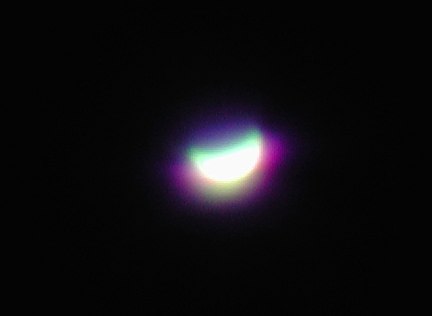
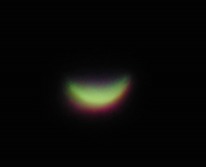
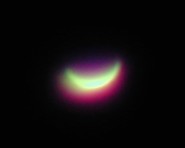

Venus Phases — Composite
A composite showing how Venus appears larger as the crescent gets thinner.

Mars — The Red Planet
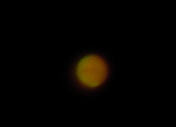
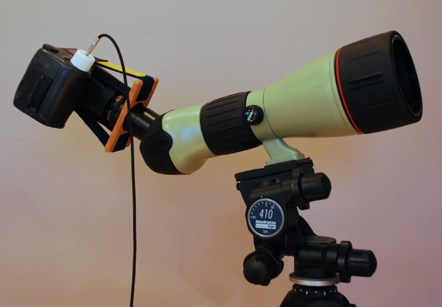
Mars photographed through a digiscope.
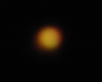

Mars in August 2003
Mars at its closest to Earth since prehistoric times. The south polar ice cap is visible, as are dark markings on the surface.
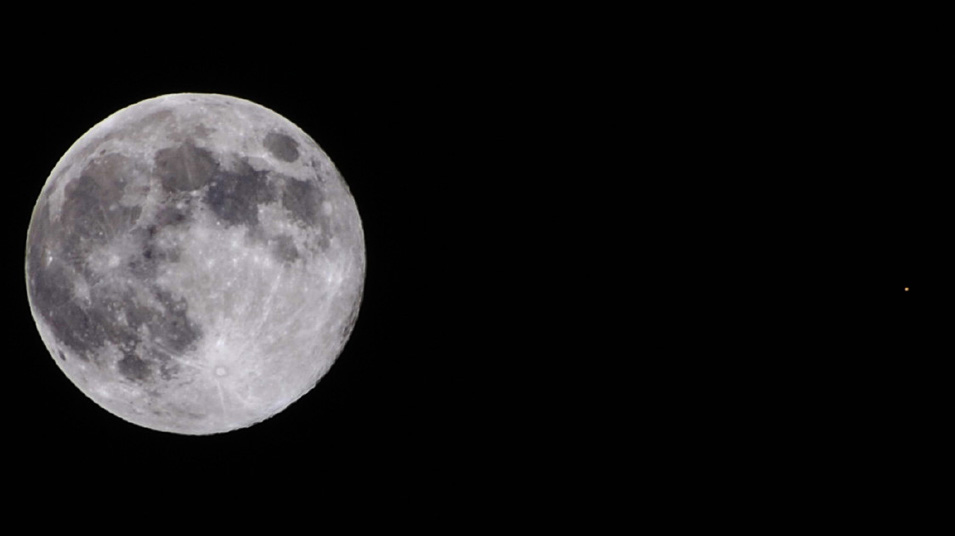
The Full Moon Next to Mars
December 23, 2007 — a good illustration of relative size. Mars is the red dot.
Jupiter
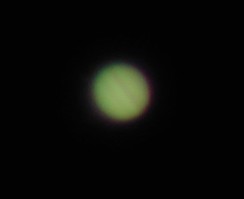
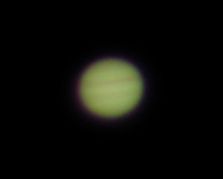
You can see the pale bands running across the surface.

Jupiter's Moons
Three of Jupiter's moons are visible.
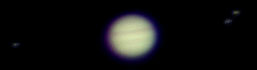
Transit of Io & Occultation of Ganymede
The shadow of Jupiter's moon Io crossing the planet (top center) and Ganymede about to disappear behind it (lower right).
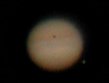
Another Transit of Io
The moon's shadow appears slightly to the left of center.
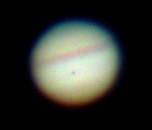
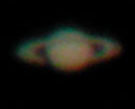
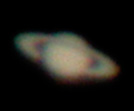
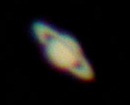
Saturn 2008
The rings are becoming more edge-on.
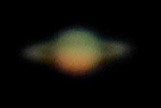
Saturn 2009
This year the ring appears only as a thin line.
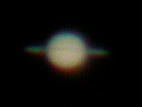
Saturn 2010
At maximum thinness, but finally the rings will be opening for the next 7.5 years. The next edge-on view will be in 2025.
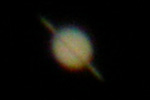
Saturn 2011
The rings are opening — now viewing from above the planet. You can see the shadow of the ring on the surface.
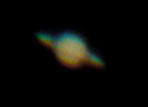
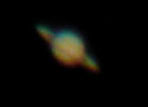
Saturn 2013
The rings are opening further, about as open as 2007 but now viewed from above.
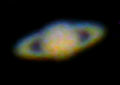
Saturn 2015
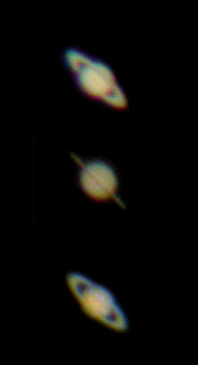
Six Years of Saturn
How Earth's view of Saturn changes over a six year period.
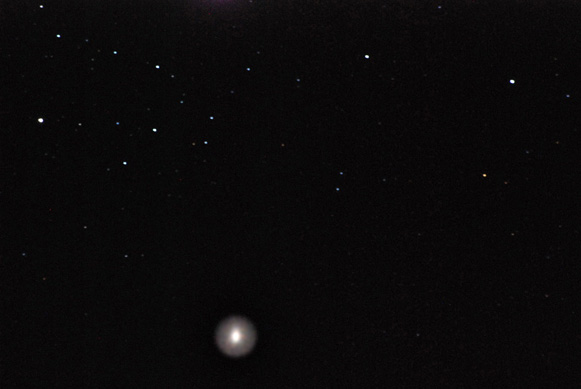
Holmes Comet — November 2007
Not a planet, but remarkable. This shows how the comet would appear in binoculars.

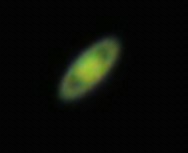
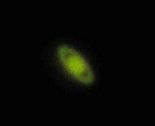
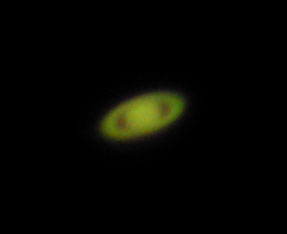
Saturn 2003–2005